Walking the Line: What I Actually See When I Look at Your Home Security
“I swear, most of the gates I check only latch if you lift them just so, or give them a good shove. Or they’re simply unlatched. ‘Oh, the kids are always in and out,’ people say. Or, ‘The gardener leaves it open.’ Fine. But that unlatched gate is an open invitation to your backyard, which is often where the real work begins for an intruder. It’s where they can try a window, or a back door, with plenty of cover. And if that gate is hidden from the street, even better for them.”
Walking the Line: What I Actually See When I Look at Your Home Security
I’ve spent enough time walking driveways and peering over fences to tell you this: most homes aren’t broken into because of some mastermind plan. It’s usually because we leave the door ajar, metaphorically speaking. Or, sometimes, literally. People get caught up in the idea of complex alarms or smart home gadgets, but the real vulnerabilities are almost always the small, everyday things we just stop noticing. It’s not about making your place a fortress; it’s about making it look like too much trouble compared to the next house down the street.
I’ll start from the curb, because that’s where most opportunists start. And what I see, more often than not, is a series of missed signals and easy passes.
The Approach: From the Street to the Side Gate
First glance, from the footpath. Are your bins still out two days after collection? It says, “Maybe they’re away.” Is there a stack of parcels on the porch, visible from the street? It’s a clear signal that nobody’s home to collect them, and there might be something worth grabbing. These aren’t high-tech surveillance; they’re just basic observations that tell a story.
Then I look at the lighting. You’ve got sensor lights, good. But half the time, they’re either aimed at the sky, or they’re completely blocked by that overgrown shrub you’ve been meaning to trim. So, when someone walks up your path at night, they’re still in shadow. A sensor light blocked by shrubs is not really a sensor light anymore.
And the side paths. Every house has one, usually leading to the backyard. How many are well-lit? How many are clear of obstacles? Most are dark, narrow, and often hidden from street view by a hedge or a garage. That’s a perfect workspace for someone who doesn’t want to be seen. It’s quiet, it’s out of sight, and it’s often the path of least resistance.
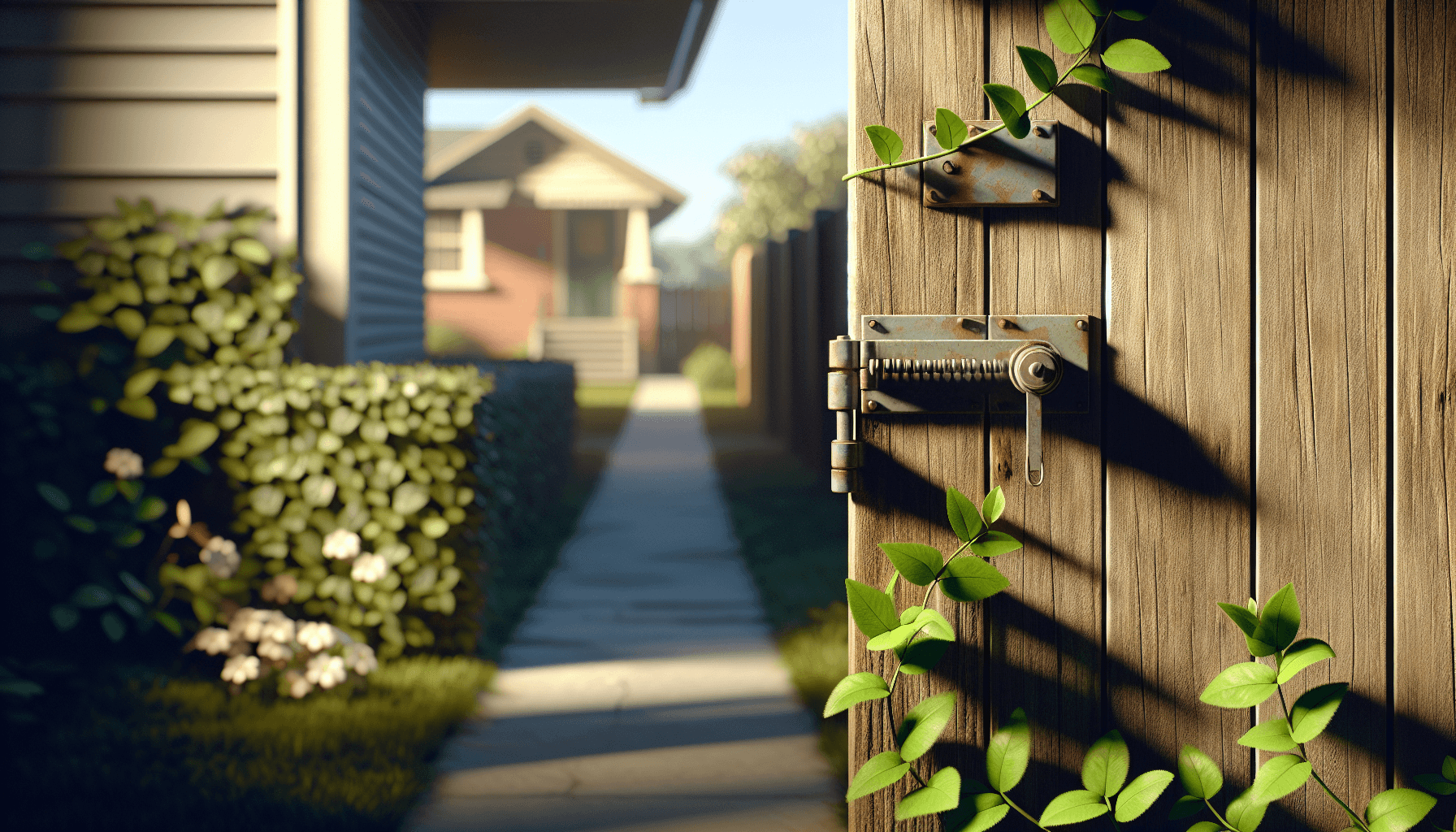
Which brings me to the side gate. I swear, most of the gates I check only latch if you lift them just so, or give them a good shove. Or they’re simply unlatched. “Oh, the kids are always in and out,” people say. Or, “The gardener leaves it open.” Fine. But that unlatched gate is an open invitation to your backyard, which is often where the real work begins for an intruder. It’s where they can try a window, or a back door, with plenty of cover. And if that gate is hidden from the street, even better for them.
The Garage and the Doors: More Than Just Locks
Now, the garage. I’ve seen more garage remotes left clipped to the sun visor in unlocked cars parked in the driveway than I care to count. That’s not just a remote for your garage; it’s a remote for your house. Someone breaks into your car, they’ve got instant access to your garage. And from there, often, an easy entry into the house itself. Keep that remote out of sight, or better yet, take it with you.
And the garage door itself. Is it solid? Or is it one of those flimsy roll-up types that someone could cut through with a box cutter if they had five minutes and a bit of cover? And the internal door from the garage to the house—is it a proper solid core door with a good deadbolt, or just a hollow-core interior door with a standard passage lock? You’d be surprised how many homes have a weak link right there.
Moving to the actual doors. Your front door probably has a decent deadbolt. Good. But what about the back door? The laundry door? The sliding glass door to the patio? I’ve seen countless sliding doors with nothing more than a flimsy latch, or a wooden dowel that’s too short to actually block the door. And those flyscreen doors? They’re for keeping bugs out, not people. Don’t mistake a flyscreen for a security screen. A good security screen door is bolted into the frame, has a three-point lock, and is made of steel mesh, not flimsy aluminum.
And the hardware. I’m talking about the screws holding your strike plate in place. If they’re half-inch screws, they’re useless. A good kick will rip them right out of the frame. You need two or three-inch screws that go deep into the stud. It’s a five-minute job, costs next to nothing, and makes a world of difference. Most people never check this.
Windows, Routines, and the Illusion of Privacy
Windows. Especially on the ground floor, or those obscured by bushes. Are they locked? Really locked? Not just latched, but properly secured? And if you’ve got those old-style sash windows, a simple pin through the frame can stop them from being forced open. Again, cheap, easy, effective.
Now, your routines. This is a big one. We’re creatures of habit. Leaving for work at 7:30 AM every weekday, the same car pulling out, the lights coming on at the same time every evening. These are signals. They tell a story about when your house is empty. I’m not saying you need to live like a spy, but a little variation, or making it look like there’s variation, helps. Smart lights that randomize their schedule, a neighbor who pulls your bins in or parks their car in your driveway when you’re away. It’s about creating doubt. Making your house look less like an easy, predictable target.
And social media. I’ve seen people post photos of their holiday cocktails from Bali while their house sits empty for two weeks. That’s not just sharing; that’s advertising. Keep your travel plans private. It’s just common sense.
The Tech Trap: Cameras, Alarms, and Flat Batteries
Everyone loves a good security camera. But how many are actually working? I’ve seen cameras with dead batteries, lenses obscured by spiderwebs, or pointed at a blank wall because a new plant grew in front of it. And the worst: cameras that aren’t actually recording, or where the footage is so grainy it’s useless. You need to check these things. Regularly. Walk around, look through the lens, make sure it’s doing what you think it’s doing. A camera with a flat battery or a blocked view is just a decoration.
And alarms. They’re great, but they’re only as good as your response plan. If your alarm goes off, who gets the alert? What do they do? Do you have a neighbor who will actually check, or is it just going to blare until it annoys everyone? And don’t get me started on the false sense of security some smart home systems give. A smart doorbell is handy, but it’s not a replacement for a solid deadbolt. These tools are meant to help your security, not be your security. They help, but they do not do the whole job. Relying too much on an app to tell you if your house is safe means you’ve probably forgotten about the basics.
The Hard Truth: It’s About Attention, Not Expense
Ultimately, home security isn’t about spending a fortune. It’s about paying attention. It’s about the small, mundane habits that, when done consistently, make a real difference. It’s about understanding that most intruders are looking for the easiest path, the quickest grab. They don’t want a fight, and they don’t want to spend time. Every unlatched gate, every unlit path, every predictable routine, every visible parcel—these are all tiny invitations. And if you keep sending them, eventually, someone will accept. That is not fearmongering. It is just basic risk. The homes that get targeted are often not the weakest on paper. They are the ones quietly giving away the most chances.
Filed under
Physical Security →Protecting buildings, offices, and physical assets from unauthorised access, tailgating, and impersonation.
Related Articles

What Does A Reception Security Guard Do?
Reception security guards play a crucial role in safeguarding businesses. This article explores their responsibilities, the importance of th...

Top 10 Risks to Warehouses in 2023
Warehouses are prime targets for criminal activity, facing various physical security risks. This article discusses the top 10 risks in 2023...

How to Conduct a Physical Security Risk Assessment for Your Business
A physical security risk assessment is essential for protecting your business from potential threats. This guide walks you through a compreh...